
Updated 07/09/2026
Losing a baby tooth is an exciting milestone, unless it happens too soon.
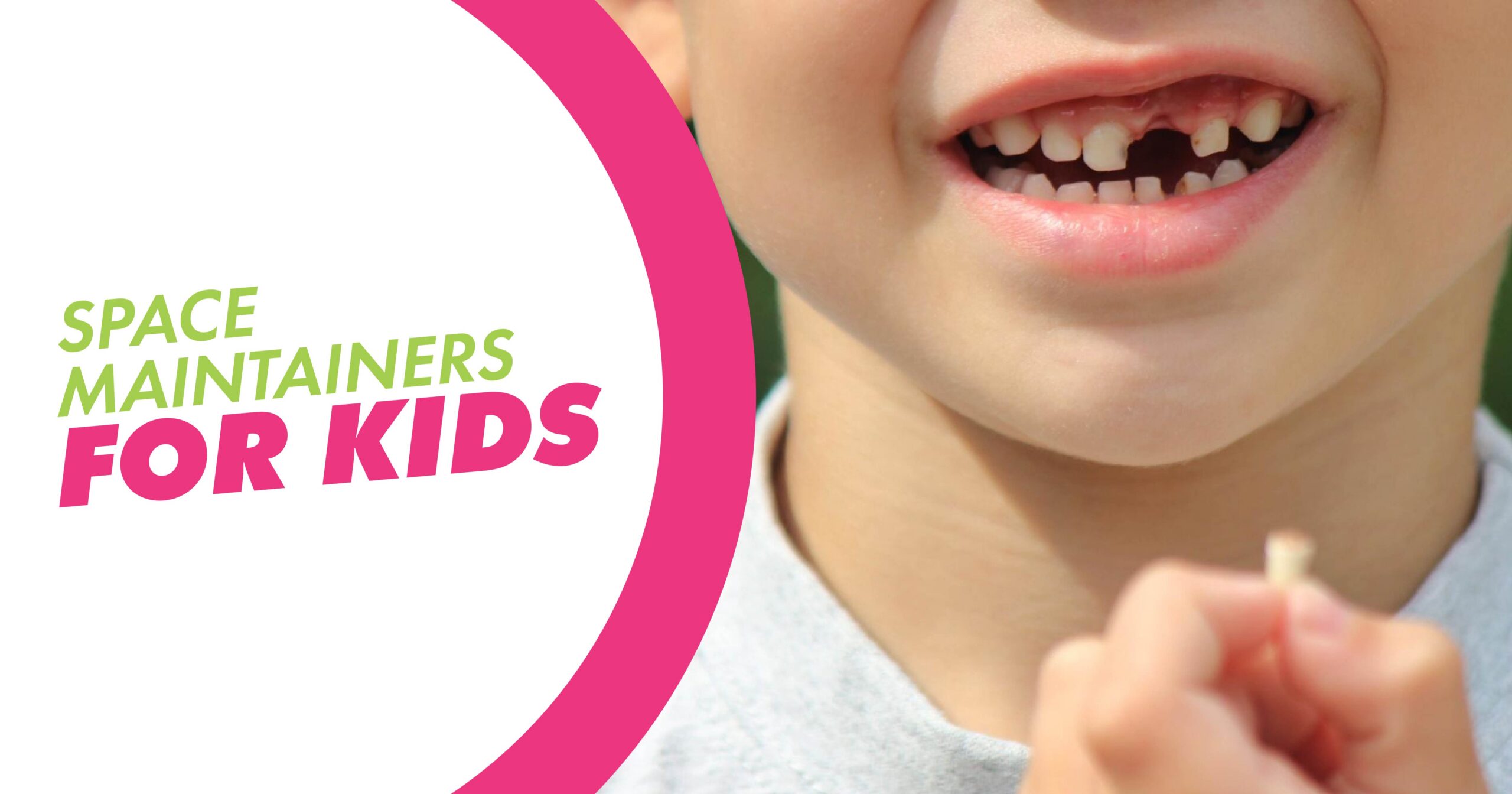
Whether a baby tooth is knocked out while playing, damaged in an accident, or has to be pulled because of tooth decay, premature tooth loss can impact how your child’s permanent teeth come in.
Thankfully, an appliance called a dental space maintainer can save the day.
In this post, our Naperville pediatric dentists will be sharing eight things parents should know about space maintainers for kids, including when they’re needed, how they work, the different types available and how they can help prevent future orthodontic problems.

8 Things Parents Should Know About Space Maintainers for Kids
1. Baby Teeth Play Important Roles
Baby teeth aren’t just adorable; they’re important for your child’s oral health and development.
Yes, they will fall out eventually, but while they’re in place, they have several jobs.
Baby teeth:
- Save space for permanent teeth.
- Help kids bite and chew comfortably.
- Support speech development.
- Contribute to healthy jaw, chewing muscle, and facial growth.
When we recommend a space maintainer for a tooth, it’s because it wasn’t finished guiding development and acting as a placeholder for the permanent tooth beneath it.
For a more in-depth look at primary teeth, check out: “Why Do We Have Baby Teeth?”
2. Pediatric Space Maintainers Help Prevent Orthodontic Problems
So, what is a space maintainer for teeth? It’s a custom-made dental appliance designed to preserve the space left behind when a baby tooth is lost too early due to injury or decay.
Without that baby tooth, the neighboring teeth have a tendency to drift into the empty space. As they shift, they can block the permanent tooth from erupting properly.
This may contribute to problems like:
- Crowded teeth
- Crooked permanent teeth
- Impacted teeth
- Bite problems
- More complex orthodontic treatment later
A pediatric space maintainer doesn’t move teeth or cause changes in your child’s dentition. Instead, it simply holds the space open until the permanent tooth is ready to erupt.
3. Not Every Child Needs a Space Maintainer
Space maintainers for kids aren’t a blanket solution. While they can be extremely helpful in many situations, not every child who loses a baby tooth early will need one.
Before recommending treatment, our pediatric dentists consider factors such as:
- Your child’s age
- Which baby tooth was lost
- How much the permanent tooth has developed
- How soon the adult tooth is expected to erupt
- Your child’s overall bite and dental development
For example, if the permanent tooth is already close to erupting, a space maintainer may not be necessary.
At Innovative Pediatric Dentistry, we evaluate every child individually to determine the best course of action.
4. There are Different Types of Dental Space Maintainers
There are several different types of dental space maintainers. The specific appliance your child receives depends on which tooth was lost and how many teeth are missing.
Band and Loop Space Maintainer
The band and loop space maintainer is the most common option.
A small metal band is placed around a neighboring tooth, while a custom wire loop extends across the empty socket to save space for the permanent tooth to erupt.
Bilateral Space Maintainer
A bilateral space maintainer is typically used when multiple teeth are missing or support is needed on both sides of the mouth.
Rather than protecting just one space, it helps maintain proper spacing across a larger section of the dental arch.
Fixed Space Maintainers
Most children receive a fixed space maintainer that’s securely attached to the teeth and remains in place until your pediatric dentist removes it.
Because kids don’t have to remember to wear it, fixed appliances tend to provide the most predictable results.
Removable Space Maintainers
There are removable space maintainers and, in some cases, older kids are candidates for them.
However, the appliance relies on patient compliance since it has to be worn consistently to be effective, so the removable option is used less often than fixed appliances for pediatric dental patients.
5. Getting a Space Maintainer is Quick and Easy
The idea of your child needing a dental appliance might seem intimidating, but getting a space maintainer is actually a simple, comfortable process.
First, our pediatric dentist will perform an exam and take digital X-rays, if needed, to determine if a space maintainer is necessary. Once the treatment plan is confirmed, a custom appliance will be made to fit your child’s mouth.
When it’s ready, your child will return for a short appointment to have the appliance fitted and adjusted to ensure it’s comfortable.
Most kids adapt to their space maintainer within a few days and quickly forget it’s even there.
6. Caring for the Appliance is Simple
Help your child protect their pediatric space maintainer by encouraging them to:
- Brush twice a day with a soft-bristled toothbrush and fluoride toothpaste, paying special attention around the appliance.
- Floss once daily.
- Avoid sticky, chewy foods like gum, caramel, and taffy.
- Skip hard foods such as ice and hard candies that could damage the appliance.
- Avoid pulling or playing with the space maintainer with their fingers or tongue.
Regular dental checkups are also important so your pediatric dentist can monitor the appliance and your child’s progress.
7. Space Maintainers for Kids are Temporary
A dental space maintainer only stays in place until the permanent tooth is ready to erupt. Depending on your child’s age and which tooth was lost, that may be several months or a few years.
During routine visits, our pediatric dentists will monitor your child’s development. Once they confirm the permanent tooth is coming in correctly, they’ll remove the space maintainer.
8. Early Intervention Can Protect Your Child’s Smile
If your child loses a baby tooth too early, it might seem like a minor issue. However, preserving that space today will help prevent more complicated dental and orthodontic problems tomorrow.
One of the biggest advantages of choosing Innovative Pediatric Dentistry is that we’re part of the Innovative Dental Partners family and our office is connected to Innovative Orthodontic Centers. This allows for seamless, coordinated care between your child’s pediatric dentist and orthodontic specialist whenever it’s needed.
Whether your child requires a space maintainer, is ready for their age 7 orthodontic evaluation, or could eventually benefit from orthodontic treatment, we’ll work together to achieve their healthiest, most confident smile.
Frequently Asked Questions About Space Maintainers
Are space maintainers painful?
No. Your child will probably notice the appliance for the first day or two, but most kids adjust quickly and experience little to no discomfort.
How long does a space maintainer stay in?
It depends on your child’s age and how soon the permanent tooth is expected to erupt. Your Naperville pediatric dentist will monitor your child’s progress and remove the appliance when the timing is right.
Can my child eat normally with a space maintainer?
Yes. Kids can continue eating most of their favorite foods, though it’s best to avoid sticky candies, chewing gum, and very hard foods that could loosen or damage the appliance.
Where can I find space maintainers near me?
If your child loses a baby tooth too early, the best place to start is a pediatric dental office.
Pediatric dentists complete years of additional specialty training focused exclusively on children’s oral health and development, making them the experts in determining whether a dental space maintainer is needed.
If you’re searching for space maintainers in Chicagoland, the team at Innovative Pediatric Dentistry can help. We offer personalized, high-tech children’s dentistry in a fun, kid-friendly space.
What happens if my child doesn’t get a space maintainer?
If certain teeth are lost prematurely, without a space maintainer, the neighboring teeth will drift into the empty space. This can interfere with the eruption of the underlying permanent tooth and increase the likelihood of crowding, bite problems, or the need for more extensive orthodontic treatment later.
Do all kids need a space maintainer after losing a baby tooth?
No. Every child’s smile develops differently. Your pediatric dentist will assess whether a space maintainer is needed based on your child’s age, dental development, and which tooth was lost.
Explore Space Maintainers in Chicagoland
Baby teeth may be temporary, but the roles they play in smile development are important.
If your child lost a baby tooth too early due to decay, injury, or extraction, the team at Innovative Pediatric Dentistry can determine whether a dental space maintainer is the right solution.
Schedule an appointment today, and we’ll help keep your child’s smile on the right track.