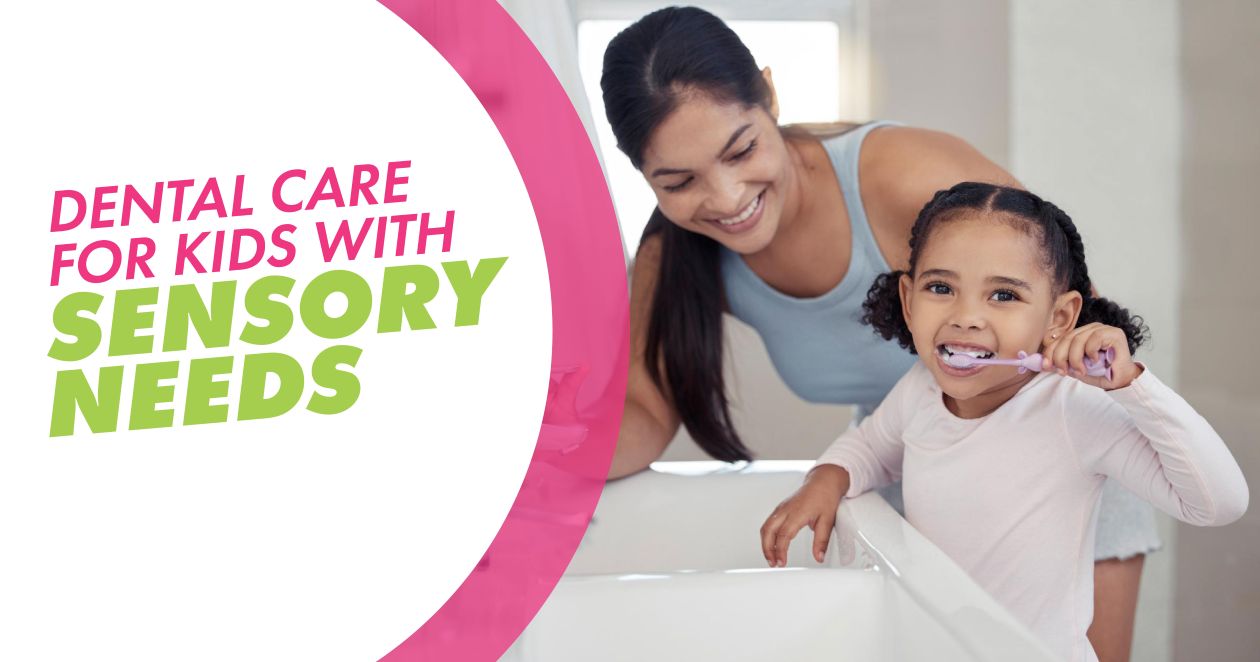
For some kids, brushing teeth is an automatic part of the day that barely registers, while for others, it’s a source of sensory overload.
The scratchiness of toothbrush bristles, the strong flavor and foamy texture of toothpaste, the buzzing of an electric toothbrush, water in the mouth…any one of these sensations (or all of them at once) can make brushing teeth feel like too much.
And a trip to the dentist? That introduces a whole new set of sights, sounds, smells, tastes, textures, and unfamiliar sensations.
At Innovative Pediatric Dentistry, we understand that oral hygiene and dental care for kids with sensory needs sometimes requires a different approach. Whether your child has autism, ADHD, anxiety, sensory processing differences, or just doesn’t like the feeling of things in their mouth, understanding what’s behind their reactions can help make oral care at home and the dental office more manageable.
Why Does My Child Have Sensory Issues With Teeth Brushing?
We all process sensory information differently, and the mouth is an especially sensitive part of the body.
Some children are hypersensitive, meaning everyday sensations can feel unusually intense or uncomfortable. Something as seemingly minor as the bristles touching their gums can be enough to trigger a strong reaction.
Other children are hyposensitive and seek out more sensory input. This could look like chewing on the toothbrush or having a hard time staying still long enough to brush properly.
Toothbrushing in general combines multiple types of sensory input at once (i.e., touch, taste, smell, sound, and movement) while requiring a child to tolerate having something in their mouth. For kids with heightened sensory needs, it’s a lot to process in two minutes.
What Are Signs That Toothbrushing Is Causing Sensory Overload?
Kids aren’t always able to explain why brushing their teeth feels uncomfortable, but their behavior will usually tell you something isn’t working.
Depending on your child’s sensory needs, you might notice that they:
- Gag when brushing.
- Pull away when the toothbrush enters their mouth.
- Strongly dislike certain toothpaste flavors or textures.
- Cover their ears or become upset by the sound of an electric toothbrush.
- Resist having their face or mouth touched.
- Only tolerate brushing certain parts of their mouth.
- Constantly chew or bite down on the toothbrush.
- Have difficulty maneuvering the toothbrush.
- Have trouble staying still long enough to brush thoroughly.
- Avoid toothbrushing altogether.
- Cry or throw a tantrum when it’s time to brush.
Instead of focusing solely on getting through those two minutes, pay attention to when your child starts struggling. Are they fine until you add toothpaste? Do they bite down as soon as the toothbrush goes into their mouth? Do they tolerate brushing themselves but become upset when you help?
Identifying the specific trigger or sensory need can make it easier to find a way to work through it.
How Can I Make Toothbrushing Easier for a Child With Sensory Issues?
There’s no single “sensory-friendly” brushing routine that works for every child. The key is to experiment, follow your kiddo’s cues, and adapt the routine to their needs.
Try Different Toothbrushes
For a child who is sensitive to touch, an extra-soft toothbrush with a smaller head will likely be more comfortable.
If your child seeks sensory input, an electric toothbrush is worth trying. The vibration can provide stronger, more consistent sensory feedback than a manual toothbrush.
If dyspraxia (fine motor control and coordination challenges) is behind toothbrushing struggles, consider a semi-hands-free option like Autobrush® or the sensory-friendly Willo® toothbrush.
In any case, it’s a good idea to let your child hold and try the toothbrush before jumping right into daily brushing with it.
Experiment With Toothpaste
Strong flavors, gritty textures, and foaming can all be challenging for kids with oral sensitivities.
If toothpaste is the sticking point, there are plenty of unflavored options on the market. You can also talk with your pediatric dentist about age-appropriate fluoride toothpastes with different flavors or textures.
Make the Routine Predictable
Meltdowns when brushing teeth are sometimes because of the transition. Ensuring your child knows what comes next can reduce some of the overwhelm.
Try brushing at the same times and following the same sequence every day. You can also use a visual schedule, timer, or favorite two-minute song to help your child anticipate what’s happening and know when brushing will be finished.
Add Movement or Make It a Game
For kids who have trouble staying still or seek extra sensory input, don’t feel like toothbrushing has to involve standing perfectly still in front of the bathroom mirror.
Turn on a favorite song, add simple, safe movements, count teeth together, or create a brushing challenge. Making the routine more active and engaging can help sensory-seeking kids stick with it long enough to get their teeth clean.
Need more ideas? Download our guide, “12 Fun Activities to Get Kids to Brush Their Teeth.”
Build Tolerance Gradually
If your child has a strong aversion to having their mouth touched, start small. That might mean letting them hold the toothbrush, touching it to their lips, or brushing just a few teeth before gradually working toward a complete brushing session.
Instead of turning brushing into a twice-daily battle, slowly create positive experiences to build tolerance over time.
Give Your Child Choices
There are parts of oral hygiene that aren’t negotiable. Those teeth still need to get clean, after all! But giving your child control over smaller decisions can make the routine feel more manageable.
- “Blue toothbrush or green?”
- “Top teeth or bottom teeth first?”
- “Do you want to start, or should I?”
Are There Special Considerations for Autism and Teeth Brushing?
A comparative study published in Special Care in Dentistry found that compared to children with other disabilities, kids with autism had greater sensory sensitivities that were more likely to interfere with oral care at home and at the dentist’s office.
But keep in mind, when it comes to autism and teeth brushing, those sensitivities can look very different from one child to another.
One child might find certain toothpaste flavors overwhelming, while another might dislike the feeling of the toothbrush in their mouth. Others still could struggle with changes in routine or transitioning from another activity to brushing.
Sensory-seeking behaviors can also come into play, such as needing movement or stronger sensory feedback.
Notice what your child tolerates well, where they struggle, and what seems to help. Be sure to share these observations with your child’s pediatric dentist as well, so they can make personalized home care recommendations.
Why Can Dental Visits Be Overwhelming for Kids With Sensory Needs?
While brushing at home can be challenging, a dental appointment introduces a whole new sensory environment.
There are bright overhead lights, unfamiliar smells, new people, dental instruments, suction, water and air, different tastes and textures, and the sensation of the chair moving and reclining.
There’s also an element of unpredictability. Your child might not know exactly what someone is going to do inside their mouth or how long it will last.
A child who pulls away, becomes tense, covers their ears, refuses to open their mouth, or needs a break isn’t necessarily being “uncooperative.” Their behavior could just be their way of communicating that they’ve reached their sensory limit.
That’s why dental care for kids with sensory needs, or any child for that matter, should never be one-size-fits-all.
How Do Dentists Handle Sensory Overload?
So, how do dentists handle sensory overload when a child struggles during an appointment? At Innovative Pediatric Dentistry, it starts with getting to know your child.
Our team is experienced in caring for children with a wide range of needs, and we can adapt the visit to make your little one feel more comfortable. This might look like:
- Giving your child a tour of the practice before their appointment.
- Scheduling the visit at a time when the office is quiet.
- Explaining what’s going to happen in simple, kid-friendly terms.
- Using tell-show-do to introduce unfamiliar tools and sensations.
- Giving your child extra time to process.
- Introducing new experiences gradually.
- Offering appropriate choices.
- Breaking longer appointments up into multiple shorter visits.
- Having your child sit on your lap, depending on their age and preferences.
- Establishing a signal your child can use when they need us to stop.
- Taking breaks when needed.
- Moving at your child’s pace.
- Watching for early signs that they’re becoming overwhelmed.
We also rely on parents as part of the team. You know your child best, so tell us what tends to trigger sensory overload, how your child communicates when they’re uncomfortable, and what helps them feel calm and secure.
Can Technology Make Dental Visits Easier for Kids With Sensory Issues?
Absolutely. Along with adapting how we deliver care, we use sensory-friendly technology to make dental appointments faster and more comfortable.
For example, our small digital pediatric X-ray sensors fit little mouths better than traditional bitewings, while our handheld NOMAD X-ray device allows a team member to stay right beside your child while taking images.
Our iTero® digital scanner eliminates the need for messy, goopy impressions, which can be especially helpful for children who are sensitive to tastes and textures or have a strong gag reflex. And that’s just the beginning.
We’ve covered our technology in detail in “5 Sensory-Friendly Dental Tools We Use for Easier Visits.” Check out the post to learn more about the tools we use to reduce some of the sights, sounds, textures, and sensations that can make traditional dental care challenging.
Sensory Processing Disorder and the Dentist: How Can I Prepare My Child for Their Appointment?
When scheduling an appointment, let our team know about your child’s sensory needs and anything that has made dental or medical appointments difficult in the past.
Helpful information can include:
- Specific sounds, tastes, textures, smells, or types of touch your child dislikes.
- How your child lets you know they’re overwhelmed.
- What helps them feel calm or regulated.
- Communication strategies that work well.
- Approaches you’ve found helpful during toothbrushing.
- Previous dental experiences that went particularly well, or didn’t.
As for what you can do as a parent:
- Talk to your child about their upcoming visit using clear, simple language. Explain what they can expect without going into too much detail.
- Avoid words like “drill” or “shot.”
- Ensure your child is fed and well-rested before their appointment.
- Have your little one bring a comfort buddy along with them, such as a favorite toy or stuffed animal.
- Use social stories, watch a video, or read a book about going to the dentist.
- Schedule a meet-and-greet with the dental team and a tour of the office ahead of the actual appointment.
The goal isn’t necessarily to convince your child that nothing will feel unfamiliar. It’s to make the experience as predictable as possible and give your dental team the information they need to support them.
For more tips, read “10 Tips to Make Going to the Dentist Easier for Kids With Autism.”
How Do I Find a Dentist for Kids With Sensory Issues?
If you’ve been searching for a dentist for kids with sensory issues, a pediatric dentist is your best bet.
Pediatric dentists complete additional specialty training focused on the unique oral health, developmental, and behavioral needs of children, including children with special healthcare needs.
Beyond their credentials, a sensory-friendly pediatric dentist will also be willing to learn about your child, listen to your concerns, and adapt their approach.
At Innovative Pediatric Dentistry, we provide personalized, high-tech children’s dentistry in a fun, kid-friendly environment. Our team is experienced in caring for kids with autism spectrum disorder, ADHD, anxiety, sensory processing differences, and a wide range of other physical, developmental, emotional, and medical needs.
Can Dental Care Get Easier for Kids With Sensory Needs?
Yes! It might take some patience, experimentation, and teamwork, but oral care can get easier over time.
The first step is often figuring out why your child is struggling, whether it’s the feeling of the toothbrush, the taste or sensation of toothpaste, trouble standing still, or needing extra time to adjust to new sensations.
Once you understand what’s getting in the way, you can start finding solutions that work for your child. The best part is you don’t have to figure it out alone.
If you’re looking for dental care for kids with sensory needs in Naperville, IL, the team at Innovative Pediatric Dentistry is here to help with oral hygiene strategies for home and personalized, sensory-friendly dentistry in our office.
Tell us about your child’s needs when you schedule their visit, and we’ll work together to make caring for their smile as effective and stress-free as possible.
Schedule an appointment at Innovative Pediatric Dentistry today.